
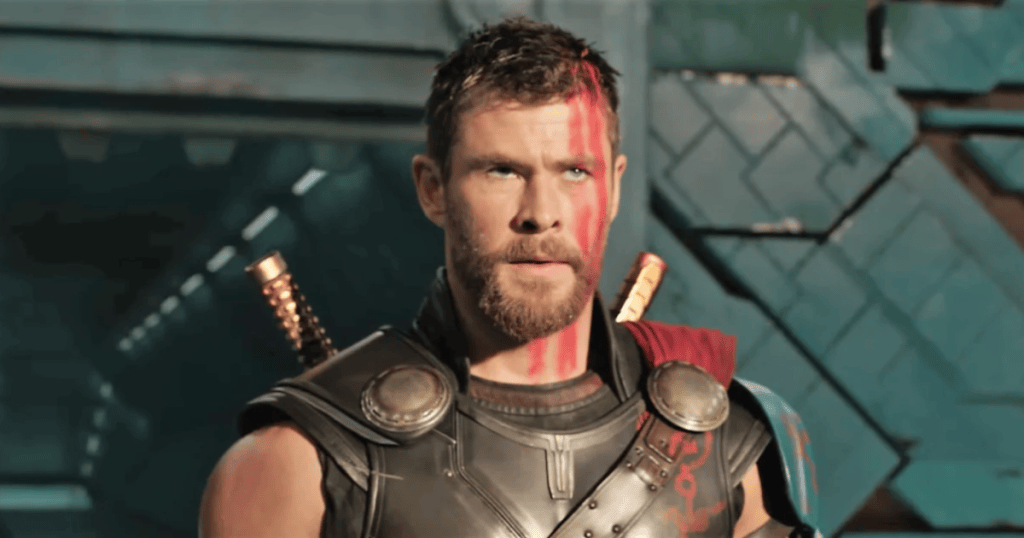
Thor: Ragnarok is a remarkable reinvention of a superhero franchise that had struggled to establish a consistent identity. Director Taika Waititi trades the Shakespearean grandeur of Kenneth Branagh’s original film and the comparatively somber approach of its sequel for a neon-soaked cosmic adventure filled with irreverent humor, outrageous characters and spectacular action. Beneath its comedic exterior, however, the film tells a surprisingly consequential story about inherited legacies, historical accountability and the distinction between preserving a civilization and preserving the institutions that built it. Thor must lose nearly everything he associates with his identity before understanding what it actually means to be the heir to Asgard.
The film’s most compelling theme is its rejection of inherited legacy, particularly the uncomfortable history behind national greatness. Thor’s understanding of Asgard is built around the benevolent kingdom his father has spent centuries maintaining, but Hela’s arrival exposes a much darker past. Odin once conquered entire worlds alongside his firstborn daughter, ruling through violence and imperial expansion before eventually abandoning that ambition. Hela, who was banished when her appetite for conquest became uncontrollable, sees no reason to reject the empire that made Asgard powerful. She considers herself its rightful heir because she was there when it was built. Her return forces Thor to recognize that the kingdom he loves was founded on atrocities that its current rulers have conveniently forgotten.
Hela’s authoritarianism is especially frightening because she represents the logical continuation of Asgard’s imperial past. She does not arrive with a complicated vision for reform or a willingness to compromise. She immediately murders those who oppose her, seizes the throne and makes clear that her claim to power supersedes everyone else’s. Cate Blanchett is terrifying in the role, establishing Hela’s superiority almost immediately by destroying Mjolnir with her bare hands. Her power only grows as the film progresses, and Thor spends scenes with her fighting an opponent he simply cannot defeat through conventional means. Hela’s ideology also exposes the danger of confusing national identity with unquestioning loyalty to a glorified history. She believes Asgard’s greatness comes from domination, while Thor eventually understands that its people matter far more than its monuments or military achievements.
The struggle over Asgard’s throne is complicated long before Hela appears. Thor initially considers himself entitled to inherit his father’s kingdom, despite lacking the maturity to understand what leadership requires. Loki, meanwhile, wants the throne so desperately that his ambition repeatedly undermines his judgment. Their relationship has always been defined by competing insecurities, but the film gives both brothers an opportunity to move beyond their familiar roles. Loki has technically assumed the throne by impersonating Odin, surrounding himself with statues and theatrical reminders of his supposed greatness. Thor, on the other hand, discovers that being a king requires something more than possessing extraordinary strength or winning the approval of his father. Both brothers must confront the limitations of the identities they have constructed for themselves.
Thor’s personal transformation is reinforced through the destruction of Mjolnir early in the film. For years, the hammer has been the defining symbol of his identity, representing his royal inheritance and his connection to the power of Asgard. Losing it forces him to confront the possibility that he has mistaken the source of his abilities for the object that channels them. His eventual realization that his power comes from within is a fitting culmination of his journey, particularly because it coincides with his rejection of the idea that Asgard’s survival depends on preserving its physical home. The kingdom is its people, not its palace. The distinction between preserving a legacy and preserving everything that created it becomes the film’s central philosophical argument.
Waititi’s tonal makeover is essential to making this transformation work. The earlier Thor films often struggled with the contrast between Norse mythology and the modern Marvel universe, leaning heavily into Shakespearean dialogue and dramatic declarations. Waititi recognizes the inherent absurdity of a spacefaring Viking god teaming up with a rage-filled monster and a drunken warrior, embracing the ridiculousness rather than trying to disguise it. His improvisational approach gives the cast room to develop a natural comedic rhythm, while Thor’s journey repeatedly strips away the things he believes define him. Even his haircut becomes a symbolic rejection of the image he has spent years cultivating. Crucially, Waititi never mocks Thor himself. Humor functions as a coping mechanism for a character experiencing tremendous loss, and the film knows when to step back and let its more serious moments breathe. Few sequences demonstrate that balance better than the final battle, when Led Zeppelin’s “Immigrant Song” provides an explosive musical backdrop for Thor finally embracing his full power.
Chris Hemsworth benefits enormously from this reinvention, delivering arguably his finest performance as the God of Thunder. This is the confident, charismatic and occasionally ridiculous hero that Kevin Feige presumably envisioned when casting him, rather than the stiff, overly formal character who struggled to find his footing in earlier appearances. Thor intentionally gets himself captured to interrogate Surtur, eagerly accepts the opportunity to fight the Grandmaster’s champion and consistently displays an entertaining confidence that makes him a natural leader. Yet Hemsworth also communicates the grief beneath that bravado. Thor loses his father, his hammer and nearly everyone he has ever known. His determination to protect Asgard’s people despite those losses gives the performance an emotional foundation that prevents the comedy from overwhelming the character. He finally understands that his responsibility is not to a throne but to the people who depend on him.
Tom Hiddleston’s Loki also benefits from Waititi’s approach. The God of Mischief remains manipulative and self-serving, but the lighter tone allows Hiddleston to explore the character beyond his usual machinations. Loki’s theatrical reign as Odin, complete with statues celebrating himself, is a particularly amusing extension of his vanity. His genuine fear when he realizes the Grandmaster’s champion is the Hulk also provides one of the film’s funniest moments. More importantly, Loki gets opportunities to demonstrate that he is a capable fighter in his own right, rather than relying exclusively on deception. His relationship with Thor remains contentious, but there is a growing recognition that their differences do not necessarily prevent them from working together.
Jeff Goldblum nearly steals the entire film as the Grandmaster, Sakaar’s eccentric and self-indulgent ruler. Waititi allows Goldblum to lean fully into his distinctive screen persona, producing a character who is simultaneously charming, unpredictable and deeply unsettling. The Grandmaster governs through hedonism, treating an authoritarian regime like an extravagant party where everyone is expected to entertain him. His casual cruelty is often hidden behind an almost childlike enthusiasm, making him a different kind of threat from Hela. Goldblum’s quirky charisma is so infectious that his presence becomes one of the film’s greatest pleasures. Tessa Thompson’s Valkyrie provides an effective counterpoint, bringing a hardened, world-weary personality to a former Asgardian warrior who has deliberately distanced herself from her past. Mark Ruffalo’s Hulk also fits comfortably into the film’s comedic framework, with the gladiatorial setting allowing the character to develop an identity beyond Bruce Banner’s struggle for control.
The film takes a considerable creative risk by adapting elements of Planet Hulk and the broader Ragnarok mythology through a much lighter comedic lens. The gladiatorial sequence is an immediate highlight, delivering the long-awaited confrontation between Thor and Hulk while giving both characters room for humor and personality. The final battle is equally satisfying, bringing together multiple characters for a series of memorable moments without losing sight of Thor’s personal journey. If there is one significant criticism, it is how much Marvel revealed in the marketing campaign. The destruction of Mjolnir and Hulk’s appearance on Sakaar were among the film’s biggest surprises, yet both were prominently featured in the trailers. Given the disappointment surrounding Thor: The Dark World, Marvel likely felt compelled to sell audiences on just how different this installment would be, but the marketing sacrificed some of the theatrical experience in the process.
Ultimately, Thor: Ragnarok succeeds because its reinvention serves a larger narrative purpose. The humor, spectacle and colorful aesthetic are not simply cosmetic changes to a struggling franchise. They help dismantle Thor’s old identity and create room for a character who understands that leadership requires more than inherited privilege. Its examination of Asgard’s imperial history also gives the film more thematic substance than its reputation as a straightforward comedy might suggest. Thor cannot undo his civilization’s past, but he can refuse to repeat it. By recognizing that a kingdom is defined by its people rather than the monuments built in their name, he becomes a far more compelling heir than either Odin or Hela ever imagined.